

Recently, Class IV laser therapy has come forth as a transformative strategy to managing pain, offering clinicians and patients alike an advanced choice to traditional treatment options. This advanced methodology employs powerful lasers to penetrate underlying tissues, facilitating healing and reducing discomfort through a non-invasive approach. As more healthcare professionals adopt this technique into their practices, understanding the key features and considerations of 4th Class laser therapy instruments becomes crucial for enhancing the efficacy of treatments.
Determining the appropriate Class 4 laser therapy device entails a detailed evaluation, from power output and choosing wavelengths to safety aspects and simplicity of operation. With numerous models on the market, healthcare professionals must evaluate options that suit their individual requirements, whether they are addressing immediate injuries, long-term conditions, or even veterinary applications. This article will examine the critical aspects to consider when picking a Class 4 laser therapy device, showcasing how these advanced tools can change approaches to pain management for both practitioners and patients.
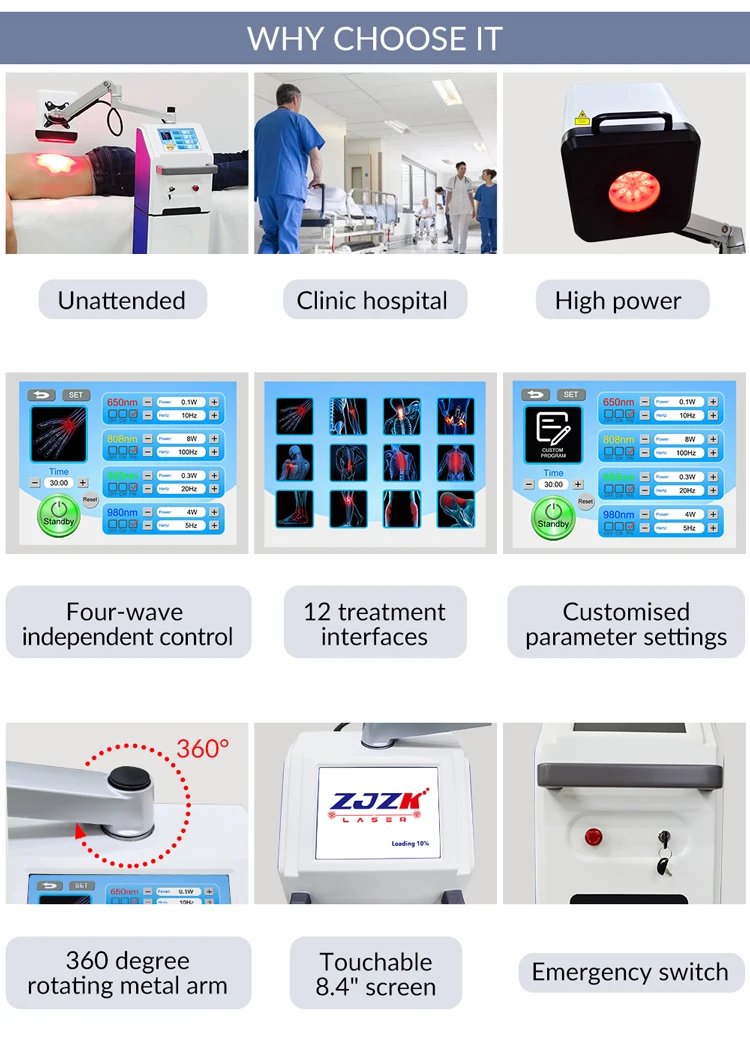
Essential Considerations for Choosing a Class 4 Laser Therapy Device
When select a Class 4 laser therapy device, a key aspect is recognizing power output. Devices in this category generally emit laser power ranging from 0.5 to 20 watts, and higher power levels can access deeper tissues, potentially leading to more effective treatment outcomes. It is essential to choose a device with an suitable power output based on the specific conditions you intend to treat, as this can greatly impact the efficacy of the therapy.
Wavelength is a further key consideration, as it affects how the laser light engages with different types of tissue. Certain wavelengths may be more effective for specific conditions, such as inflammation or tissue healing. For instance, a wavelength in the range of 800 to 1000 nanometers is often optimal for penetrating deeper tissues. When evaluating different models, consider whether they provide single-wavelength or multi-wavelength capabilities, as having a broader spectrum can increase versatility in treatments.
Finally, examine the device's portability and design features. Based on your practice or specific needs, a compact device may be more suitable for mobile applications, while a stationary unit could be more effective for a clinical setting. Additional features, such as adjustable power settings, user-friendly interfaces, and efficient cooling systems, can also play a significant role in the longevity and ease of use of the device. Thoughtfully considering hop over to here will help ensure that you pick a Class 4 laser therapy device that meets your clinical needs and enhances patient care.
Grasping the Technical Components of Class IV Lasers
Class IV laser therapy devices are defined by their wattage, which generally exceeds 500 mW. This increased power allows for more profound tissue penetration, resulting in successful pain management and healing of different conditions. A key element of grasping Class IV lasers is realizing the value of power output, as it immediately influences treatment efficacy. Elevated wattage can accelerate therapeutic outcomes by providing a stronger energy delivery, which can stimulate cellular repair and reduce inflammation.
The wavelength of the laser is a further critical factor that influences treatment results. Various wavelengths penetrate tissues to varying depths, which implies selecting the appropriate wavelength is essential for targeting specific conditions. For instance, infrared wavelengths usually penetrate further than visible light wavelengths, making them better for treating musculoskeletal issues. It is necessary to comprehend the connection between wavelength and tissue interaction to enhance the therapeutic potential of the device.
Furthermore, the construction aspects such as beam divergence and treatment area play important roles in the success of Class 4 lasers. A smaller spot size allows for targeted treatments, while wider beams can treat greater areas but may reduce intensity. Additionally, implementing advanced cooling systems can avert overheating and improve patient comfort during treatments. Understanding these technical aspects makes certain that practitioners can choose the appropriate device that corresponds to their treatment protocols and patient needs.
Analyzing Effectiveness and Security in Laser Therapy
When considering Class 4 laser therapy devices, it is essential to assess their effectiveness by reviewing clinical research and user testimonials. Evidence-based benefits are significant in affirming the credibility of these treatments. Reviewing research that demonstrate improved pain relief, faster healing times, and enhanced tissue recovery will provide insight into the device’s therapeutic potential. Furthermore, real user reviews from healthcare professionals can give practical perspectives on outcomes and satisfaction levels, shaping the decision-making process for potential users.
Security is crucial when selecting a Class 4 laser therapy device. Confirming that medical-grade photobiomodulation lasers has FDA clearance indicates that it meets strict safety and efficacy standards. Producers should provide comprehensive information regarding safety features, including protective eyewear, automatic shut-off mechanisms, and user-friendly controls to reduce risks during treatment. Reviewing the cooling systems integrated into high-powered devices is also vital, as these ensure the device can be used effectively without causing thermal damage to the skin or underlying tissues.
Ultimately, balancing effectiveness and safety is key to getting the most out of Class 4 laser therapy. By meticulously assessing the power output, wavelength options, and adjustable settings, healthcare providers can customize treatments to individual patient needs while maintaining safety standards. This thorough assessment not only enhances treatment outcomes but also fosters trust and confidence in the use of laser therapy devices within diverse clinical applications.